If you own a home in Redhawk, Paloma del Sol, Harveston, Murrieta Hot Springs, or Greer Ranch, you probably still think of it as a newer house. The paint is fresh, the cabinets are intact, the neighborhood feels current. But a slab leak in Temecula or Murrieta isn’t a freak event anymore. It’s becoming a standard repair conversation for the boom era homes that built out southwest Riverside County in the 1990s and early 2000s.
Here’s the part most homeowners miss. A slab leak rarely announces itself. The floor feels a little warm in one spot. The water bill creeps up by twenty dollars. You hear running water late at night and assume the dishwasher cycled. Nothing dramatic happens. Until it does.
The good news is that this is one of the most catchable plumbing problems in a California home. Found early, a slab leak is a contained, surgical repair. Found late, after baseboards swell and flooring buckles, the conversation shifts into a different category entirely.
What a Slab Leak Is (and Why It’s Different in Temecula and Murrieta)
A slab leak is a leak in a pressurized water supply line that runs underneath your home’s concrete foundation slab. The pipe is cast into or routed below the concrete, so when it starts weeping, the water has nowhere to go except sideways through the sub slab and up through whatever cracks it can find.
There are two flavors. A hot side leak is the more common version and the easier one to notice, because warm water under the slab heats the floor above it. Stand barefoot in a hallway and you can sometimes feel the trail. A cold side leak is quieter, with no warm spot and no thermal signature, and the first sign is often the water meter or the bill.
It’s worth separating slab leaks from two things they get confused with. A foundation leak is groundwater or surface water making its way into the slab from outside, usually after heavy rain. A sewer leak under the slab is a drain side problem, not a pressurized supply problem, and it shows up as smell, soft soil, or backups rather than as a warm spot. A slab leak sits squarely in the middle. Pressurized clean water, running continuously, in a place you can’t see.
Temecula and Murrieta homes are exposed to this specifically because the boom era build of southwest Riverside County put thousands of homes on slabs with copper supply runs cast directly into the concrete. That was standard practice in the 1990s and 2000s. Fast, cheap, and code compliant at the time.
Why So Many Temecula and Murrieta Homes Are Reaching Slab Leak Age Right Now
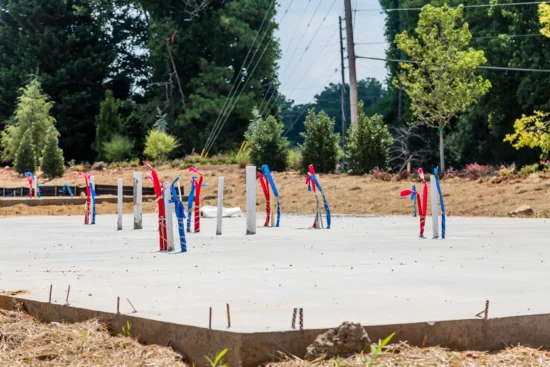
The math is simple and a little uncomfortable. A home built in Redhawk in 1996 is 30 years old in 2026. A home in Greer Ranch, built in 2002, is 24 years old. Copper supply lines in slab contact commonly begin failing around 25 years. That window is open right now across the Temecula Valley and the rest of the Inland Empire.
Three factors compound to produce that timeline, and the convergence is what makes a slab leak in Temecula and Murrieta a regional pattern rather than bad luck on one street.
The first factor is installation practice. Quick build out crews in the 1990s and 2000s ran soft copper through pre-pour layouts, often in tight bends and against rebar or aggregate. Any rough handling, any small kink, any hard contact point became a stress concentration. Those stress points don’t fail on day one. They failed 22 years later.
The second factor is water chemistry. Western Municipal and Eastern Municipal Water District deliveries use chloramine as a disinfectant, which is standard practice across most of California. Chloramine does its job in the water main, but over decades it also attacks copper from the inside in a slow, uneven way. That mechanism, pitting from within, is the classic cause of a copper pinhole leak. One day the wall of the pipe thins through. According to the U.S. Environmental Protection Agency (EPA), chloramines are widely used by public water systems throughout the United States because they provide longer-lasting disinfection in distribution systems.[1] The Copper Development Association notes that long-term internal corrosion and pitting are among the most common causes of pinhole leaks in aging copper plumbing systems.[2]
The third factor is soil. Southwest Riverside County clays swell after a wet winter and shrink during the dry down into summer. The movement isn’t dramatic. You won’t see it. But year after year, the slab flexes a fraction of an inch with the seasons, and the copper inside flexes with it. A pipe that was fine for the first fifteen winters can finally give way during the sixteenth. Expansive clay soils are common throughout Southern California and are known to create seasonal movement beneath foundations during moisture changes.[3]
Anyone of these factors on their own would be manageable. All three running together for 25 years in the same house is why slab leaks are now common across Temecula, Murrieta, Menifee, and Wildomar neighborhoods that still feel new to the people living in them.
The Signs a Slab Leak Is Already Underway in Your Home
Most homeowners we talk to recognize at least one of these slab leak signs in hindsight. The trick is recognizing two of them together, in real time, and treating that as the moment to call.
– A warm spot on the floor. This is the classic hot side signal. A patch of tile, vinyl, or laminate that’s noticeably warmer than the surrounding floor, sometimes only a foot or two across, usually sits over a leaking hot water supply line.
– An unexplained jump in the water bill. If your usage habits haven’t changed and the bill went up by twenty or thirty dollars, water is going somewhere. A slow slab leak can run hundreds of gallons a day without making a sound you’d notice.
– The sound of running water with everything off. Stand still in a quiet hallway with no fixtures running, no irrigation, and no appliances cycling. A faint, continuous trickle inside the walls or under the floor is one of the most reliable slab leak signs.
– The water meter test. Find your meter at the curb. With every fixture in the house off, watch the small low flow indicator (often a triangle or a star). If it’s moving at all, water is leaving the system somewhere.
– Hot water that’s lost its punch. A hot side slab leak bleeds hot water before it reaches the tap, so showers take longer to warm up, and hot pressure feels weaker than it used to.
– Hairline cracks in tile or grout following a line. Pressure under the slab can lift tiles or split grout along the run of the leaking pipe.
– A mildew or damp smell with no visible source. Sub slab moisture eventually finds its way up through cracks and into baseboards, carpet pad, or wall framing.
Any single one of these can be coincidence. A warm spot might be afternoon sun through a window. A higher bill might be the irrigation timer running long. Two or more together, especially in a 1990s or 2000s home, is the moment to stop guessing and get a real answer.
How Slab Leak Detection Works
Professional slab leak detection is not a destructive process. The whole point of doing it correctly is to narrow the leak to a roughly one-foot zone so any access into the concrete is surgical instead of exploratory.
The first step is almost always a pressure test on the home’s supply system. Isolate the supply, pressurize it, and watch whether pressure holds. If it drops, there’s a leak in the system. If it holds, the problem is somewhere else, and no flooring needs to come up.
From there, a licensed plumber works through a short stack of detection tools. Electronic acoustic listening uses sensitive microphones placed against the floor to pick up the high frequency hiss of water escaping a pressurized line. Infrared imaging picks up the warm trail of a hot side leak through tile or wood. In stubborn cases, tracer gas, a nontoxic and lighter than air mixture, is introduced into the line and detected where it surfaces.
If you suspect a slab leak in your Temecula or Murrieta home, a licensed plumber using professional slab leak detection can typically locate it in a single appointment, before any flooring is opened. Our Temecula plumbing services and the Murrieta team work this sequence every week, and most appointments take one to two hours to finish.
Temecula and Murrieta branch manager Jonathan Annis says the calls now cluster around the same neighborhoods every season. A homeowner in Redhawk or Greer Ranch notices the hot floor in the hallway, the water bill nudges up, and the technician arrives to pressure test a copper system that has been quietly working in slab contact for twenty-five winters. The detection visit is the easy part. The harder conversation is whether the rest of the run is going to behave the same way over the next twenty-four months, which is why Annis and his crews now spend as much time walking homeowners through the spot versus reroute versus repipe question as they do running the acoustic listening gear.
Repair Options Once a Slab Leak Is Found
Once the leak is pinpointed, you have three real slab leak repair options. None is universally right. The correct answer depends on the age of the home, the history of prior leaks, and how long you plan to stay.
Spot repair. Open the slab at the located point, cut out the failed section of copper, splice in new pipe, and close it back up. This is the lowest immediate cost and the least disruption. It’s the right call when the rest of the supply system is in good shape and this is a single, isolated failure.
Reroute. Bypass the failed run entirely by re plumbing through the attic, walls, or above the slab, usually in PEX. The failed pipe stays in the concrete, capped and abandoned. This avoids any further work in the slab itself and is a strong middle path when one run has failed but the rest of the copper looks healthy.
Whole home repipe. Replace all supply lines throughout the home, typically in PEX, leaving the slab plumbing abandoned in place. This is the right answer when a home has already had two or more slab leaks, when the copper is reaching end of life across the system, or when you want this conversation behind you for the next forty years. A whole home repipe is a bigger project up front, but it ends the cycle.
A good plumber walks you through the options, including cost, disruption, and what the failure pattern in your specific home is telling you, and lets you make the call.
Insurance, Timing, and Why Waiting Costs More
Insurance treatment of a slab leak in Temecula and Murrieta is one of the most misunderstood pieces of this whole topic. The general pattern is this. Most California homeowner policies do not cover repair of the leak itself, meaning the failed pipe and the plumber’s labor. But many policies do cover access to the leak, including the tear out and replacement of flooring, concrete, and drywall, along with the ensuing water cleanup and damage to floors, baseboards, cabinets, and contents.
Every policy is different. Read yours or call your agent before you assume either way. The California Department of Insurance is a useful starting point if you want the general framework. The point is not to expect a specific outcome. It’s to know the question is worth asking before the repair starts, not after. The California Department of Insurance advises homeowners to review policy language carefully because water damage coverage and plumbing access coverage vary significantly between carriers and policy forms.[4]
Timing matters because the cost of a slab leak compounds with time. A leak found at the warm spot stage is usually a single day repair with limited flooring impact. The same leak running for six more months saturates the sub slab, can locally undermine foundation soil, and turns ensuing damage from a small problem into a large and expensive one, quickly. Waiting doesn’t make a slab leak go away. It makes the access and the ensuing repair larger.
This is the calm urgency window. Not panic. Not “call right now.” Closer to “this is worth looking at this month.”
The Bottom Line for Temecula and Murrieta Homeowners
The homes that built modern Temecula and Murrieta, the ones still going up for sale as “newer construction,” are reaching the age when copper in slab plumbing starts to fail in normal, predictable ways. A slab leak in Temecula or Murrieta is no longer a rare event. It’s the natural midlife checkup for a tract home built between 1995 and 2005, especially across Copper Canyon, Murrieta Hot Springs, Redhawk, and Harveston.
Knowing the slab leak signs and acting at the first one keeps the repair in the contained category. Two warm spots on the same floor, a creeping water bill, and a faint sound of running water at night are not three coincidences.
If you suspect a slab leak in your home, the safest first step is a professional inspection. Roto-Rooter California serves Temecula, Murrieta, Menifee, Wildomar, and the surrounding communities, and our licensed plumbers can typically locate a suspected slab leak in about an hour, before any flooring is opened.
Frequently Asked Questions
How do I know if I have a slab leak or a regular leak?
A slab leak is in a pressurized supply line running under the foundation, while an above slab leak shows up in walls, ceilings, or under fixtures where you can usually see or hear it. The slab specific signals are a warm spot on the floor with no other explanation, the sound of running water when every fixture is off, and the water meter’s low flow indicator moving with zero usage in the house. If you see two of those together, treat it as a slab leak until a plumber proves otherwise.
Does homeowners’ insurance cover a slab leak in California?
Most California homeowner policies do not cover repair of the failed pipe itself, but many do cover access to the leak, including opening and replacing the flooring or concrete, and the resulting water cleanup of floors, drywall, and contents. Coverage varies widely by carrier and policy form. Read your policy or call your agent before the work starts, not after.
How long does slab leak detection take?
A licensed plumber using pressure testing, acoustic listening, and infrared imaging can usually pinpoint a slab leak in a single appointment, with no flooring opened during detection. The repair itself takes longer and depends on which option you choose. Detection and repair are two separate steps, and you don’t have to commit to anything during the detection visit.
Should I repair the spot or repipe the whole house?
It depends on the age of your home, the history of prior leaks, and the overall condition of the copper. A first slab leak in an otherwise healthy 1990s or 2000s system is often a clean spot repair or a single reroute. Two or more leaks within a few years usually point toward a whole home repipe, because the underlying conditions that produced the first leak are still producing more.
Written By: Ryan Stanowick and Jonathan Annis, Roto-Rooter Plumbers, Temecula, CA
References
2. California Department of Insurance residential property claims guide