If your Fresno home was built before 1975, there is a reasonable chance it has an old sewer vent trap buried somewhere in your yard, and odds are you’ve never heard of it.
These old cast iron systems, also called house traps, sewer P-traps, or yard traps, were standard installations throughout California during the 1950s and 1960s. They quietly sit underground until they start causing problems. And when they do, those problems can be expensive.
This guide explains exactly what a sewer vent trap is, how to spot one on your property, what can go wrong, and what Fresno homeowners should do about it.
What Is a Sewer Vent Trap?
A sewer vent trap, sometimes called a house trap or yard trap, is a U-shaped section of cast iron pipe installed on the main sewer lateral between your home and the city sewer connection. Its job was to hold standing water inside the line, creating a physical barrier that blocked sewer gases from traveling back into the house.
The concept is similar to the P-trap you see underneath a kitchen or bathroom sink, but much larger and buried underground. Wastewater from the home would flow out, pass through the trap, and continue toward the municipal sewer main, while the water seal inside the trap stopped sewer odors in their tracks.
This technology made sense for the era. In the 1950s and 1960s, indoor plumbing venting systems weren’t as sophisticated as modern design. The yard trap was an accepted solution under California Plumbing Code requirements of the time.
Today, modern plumbing systems use rooftop vent stacks to handle sewer gas, making old yard traps unnecessary. But in many Fresno neighborhoods, these systems are still in the ground.
How to Tell If Your Fresno Home Has One
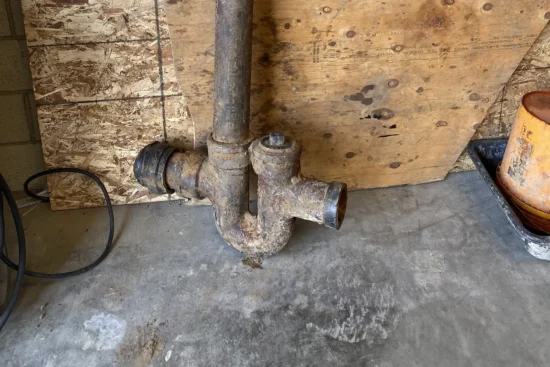
Most homeowners don’t know they have a sewer vent trap until a plumber finds it during a camera inspection. But there are visible clues to look for on your property.
The Mushroom Cap Pipe
According to Brian Deems, Branch Manager of Roto-Rooter Fresno, one of the most reliable signs is a cast iron pipe sticking up out of the ground with a round mushroom style lid on top. This access pipe is part of the house trap system.
These pipes are typically located in the front yard, backyard, or along the side of the house near the foundation. If you look down into the opening and see standing water a foot or two below the surface, that is almost certainly a sewer vent trap.
Common Visual Signs in Fresno Yards
- A short cast iron pipe (3–6 inches wide) protruding a few inches from the ground
- A round metal cap or lid on top of the pipe, sometimes corroded or partially buried
- The pipe is often located 5 to 20 feet from the house, roughly in line with the main bathroom
- Some are partially covered by concrete, landscaping, or have been paved over over time
Why Old Sewer Traps Become a Problem in Fresno Homes
When these traps were first installed, the cast iron piping surrounding them was in good condition and the systems worked as intended. Decades later, the picture is very different.
Physical Deterioration
Cast iron pipe has a lifespan of roughly 50 to 100 years depending on conditions. Much of the original pipe installed in Fresno during the 1950s and 1960s is now at or past that threshold. The interior surface corrodes, the pipe walls thin, and the trap section, which holds standing water 24/7, is often the first area to deteriorate.
Buildup and Restriction
Because a house trap holds standing water and creates a change in flow direction, it is a natural collection point for grease, debris, wipes, sludge, and root material. Over time this buildup restricts flow, and in older corroded pipe, that restriction can be severe.
Tree Root Intrusion
Fresno’s mature urban tree canopy is one of the things that makes the city beautiful. It also means tree roots are everywhere underground. Old cast iron joints and deteriorating pipe walls are vulnerable to root infiltration, and the standing water inside a house trap is exactly the kind of moisture roots seek out.
Fresno’s Specific Risk Factors
Several factors specific to the Central Valley accelerate underground sewer deterioration:
- Hot summers with ground temperatures that stress older pipe materials
- Expansive clay soils throughout Fresno that shift seasonally
- Mature landscaping in established neighborhoods like Fig Garden, Tower District, Sunnyside, Mayfair, and Tarpey Village
- Decades of deferred maintenance on infrastructure that is largely invisible to homeowners
Warning Signs: Is Your Sewer Trap Causing Problems?
Sometimes a failing house trap announces itself with obvious symptoms. Other times there are no signs at all until a backup occurs. Here’s what to watch for:
- Recurring drain backups, especially in lower-level fixtures like ground-floor toilets or floor drains
- Slow drains throughout the house (not just one fixture)
- Gurgling sounds from toilets when other drains are used
- Sewer odor outside the home near the yard, especially near the access pipe
- Wet, soggy, or unusually green patches of grass over the sewer line path
- Frequent calls to a plumber for drain cleaning that provides only temporary relief
Keep in mind: many homes with deteriorating house traps show none of these signs until a full backup occurs. This is why sewer camera inspections are increasingly common, and important, in Fresno real estate transactions.
Important: The City of Fresno states that property owners are responsible for the sewer lateral from the home to the city main. If a house trap failure causes a backup or requires repair, that cost falls on the homeowner. Source: fresno.gov/publicutilities
Sewer Camera Inspection: The Right First Step
If you suspect your Fresno home has an old sewer vent trap, or if you’re buying or selling a home in an older Fresno neighborhood, a sewer camera inspection is the right starting point.
A fiber-optic camera inspection gives your plumber a real-time view inside the sewer line. In one inspection, a technician can:
- Confirm whether a house trap is present
- Assess the condition of the surrounding cast iron or clay pipe
- Identify root intrusion, corrosion, cracks, or offset joints
- Locate restriction points and measure flow capacity
- Find potential failure points before a full backup occurs
Roto-Rooter Fresno uses professional-grade video inspection equipment and provides a recording of the inspection that homeowners can keep for their records, especially useful during real estate transactions.
Sewer Trap Removal and Repair Options
If a camera inspection reveals that your house trap is deteriorated, restricted, or contributing to recurring sewer problems, your plumber will likely recommend one of the following:
Trap Removal with Line Repair
In most cases the house trap is removed and the surrounding section of pipe is repaired or replaced. This eliminates the restriction point, brings the line to current California Plumbing Code standards, and typically improves overall flow through the sewer lateral.
Full Sewer Lateral Replacement
If the camera inspection reveals widespread deterioration beyond just the trap, common in homes with original 1950s–1960s cast iron throughout, a full lateral replacement may be the more cost-effective long-term solution.
Trenchless Sewer Repair
In some situations, trenchless sewer lining or pipe bursting can be used to rehabilitate the line without major excavation. A camera inspection determines whether the existing pipe condition is a candidate for trenchless methods.
Every property is different. The right recommendation depends on the specific condition of your pipe, the location of the trap, and local permit requirements. A proper camera inspection is always the necessary first step before any repair decision.
Fresno Neighborhoods Most Likely to Have Sewer Vent Traps
House traps are most common in homes built between approximately 1940 and 1975. In the Fresno and Central Valley area, that includes a large number of residential neighborhoods that are still very much active today.
Homeowners in these Fresno neighborhoods should be especially aware:
- Tower District high concentration of pre-1960 housing stock
- Fig Garden established mid-century homes with mature landscaping
- Sunnyside dense residential development from the 1950s–1970s
- Mayfair Older established community with original infrastructure
- Tarpey Village Mid-century homes near the Clovis border
- Central Fresno and downtown-adjacent neighborhoods
- Older areas of Clovis with original city sewer connections
- Surrounding Central Valley communities with similar construction timelines
If your home was built before 1975 and has never had a sewer inspection, it’s worth knowing what’s underground, especially before buying, selling, or doing any significant landscaping or excavation work near the sewer line path.
Buying or Selling a Home in Fresno? What You Need to Know
Sewer camera inspections have become increasingly standard in Central Valley real estate transactions, and for good reason. A home can look and perform perfectly on the surface while a deteriorated house trap or failing sewer lateral is developing underground.
For buyers: A sewer inspection before closing is one of the most valuable inspections you can order, especially on pre-1975 homes. Sewer line repairs can run from a few thousand dollars to $15,000 or more for a full lateral replacement. Knowing before you close is far better than discovering it after.
For sellers: If your home has an older sewer system, having a proactive camera inspection done before listing gives you time to address any issues on your terms, rather than during escrow negotiations when a buyer’s inspector finds a problem.
Pro Tip: Ask your real estate agent to include a sewer scope inspection as part of the standard inspection contingency on any Fresno home built before 1975. It is inexpensive compared to potential repair costs and provides critical information for the transaction.
Frequently Asked Questions
What is a sewer vent trap and do I need to remove it?
A sewer vent trap (also called a house trap or yard trap) is a U-shaped section of pipe installed on your main sewer line, usually in the front or side yard. It was designed to block sewer gas. Whether it needs to be removed depends on its current condition, a camera inspection is the best way to find out.
How much does sewer vent trap removal cost in Fresno?
Costs vary based on depth, access, pipe condition, and whether surrounding pipe also needs repair. A qualified plumber will provide a written estimate after a camera inspection.
Can a house trap cause my drains to back up?
Yes. A deteriorated or root-invaded house trap is a common restriction point that can cause slow drains, recurring backups, and gurgling. Because it’s underground and invisible, homeowners often don’t connect the symptoms to the trap until a camera inspection reveals it.
Who is responsible for sewer lateral repairs in Fresno?
According to the City of Fresno Public Utilities Department, the property owner is responsible for the sewer lateral from the house to the point where it connects to the city main. This includes any house trap or aging pipe on the private side of the system.
Is a sewer scope inspection required when buying a home in Fresno?
It is not always legally required, but it is strongly recommended, especially for homes built before 1975. Many buyers include it as a standard contingency inspection. Roto-Rooter Fresno performs sewer camera inspections for real estate transactions throughout the Central Valley.
How long does a sewer camera inspection take?
Most residential sewer camera inspections take approximately 30 to 60 minutes. The technician will provide a real-time video assessment and explain findings on-site.
Schedule a Sewer Inspection with Roto-Rooter Fresno
If your Fresno home was built before 1975, if you’ve noticed any of the warning signs described in this article, or if you’re preparing to buy or sell a home in an older Fresno neighborhood, don’t wait for a backup to tell you what’s underground.
Roto-Rooter Fresno performs professional sewer camera inspections throughout Fresno, Clovis, and the greater Central Valley. Our licensed technicians have the experience and equipment to diagnose aging sewer systems accurately, explain your options clearly, and get the work done right.
Sources & References
City of Fresno Public Utilities Sewer & Wastewater
City of Fresno Property Owner Sewer Responsibilities
California Plumbing Code (IAPMO, 2022 Edition)
Written By: Ryan Stanowick and Brian Deems, Roto-Rooter Plumbers, Fresno CA