A clogged, loose, running, or leaking toilet disrupts a household for a lot of reasons. While many toilet problems start small, ignoring them can lead to high water bills, extensive water damage, or can result in emergency plumbing issues. However, it’s often difficult to tell what you should try to remedy yourself or what is going to require professional plumbing help.
This guide will help you to diagnose these toilet problems, offer clear options for either DIY or when to call for help, and point you toward reliable bathroom plumbing services when your home needs backup.
Common Toilet Repairs a Plumber Can Help With
Plumbing issues in the bathroom that involve a toilet usually extend beyond a simple clog. Toilets face a variety of everyday complications, and the solutions can range all the way from a full replacement to a practical fix. Common issues include:
- Running toilets: This problem usually stems from worn flappers, faulty fill valves, or broken internal tank parts. While you may be able to replace these parts yourself, if you’re not sure which part needs replacing, it’s best to call a pro.
- Leaking toilet: Moisture that accumulates around the base, the tank, the supply line, or the shutoff valve indicates an issue. This could come from a simple caulking gap or point to something deeper in the plumbing.
- Weak flushing or slow drainage: These symptoms frequently point to a deeper drain line issue rather than a simple problem inside the bowl, and will require a professional to look at the plumbing.
- Loose or rocking toilets: Movement often indicates that your fixture requires a wax ring replacement or a flange and bolt replacement to protect the floor seal. This is usually something you can fix on your own.
- Noisy operation: Phantom flushing or unexpected refills mean internal components are failing. In this case, you might need to replace your toilet fully.
If you’re unsure of the issue, a professional can inspect the fixture to determine whether your system needs a simple part replacement, a total toilet replacement, or if a deeper drain issue requires attention.
What Impacts Toilet Repair Cost?
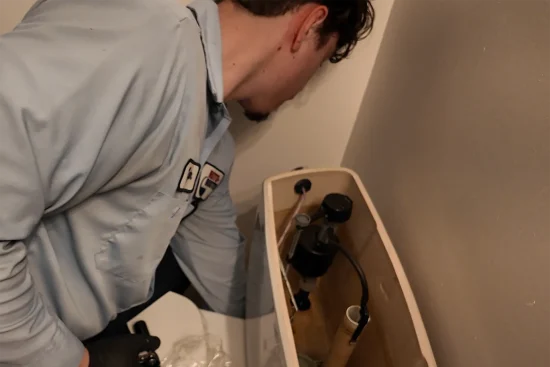
Understanding the financial side of a plumbing fix helps homeowners plan. Toilet repair costs vary based on the specific problem, the required parts, the condition of your existing plumbing, and whether you schedule the work in advance or if it’s an emergency call because of flooding.
Replacing a basic internal part involves different variables than resolving a leak at the base, and can be anything from repairing damaged flanges, fixing supply lines, or clearing complex drain lines. If it’s an emergency situation due to plumbing, the cost can be even higher when compared to a standard scheduled visit, especially if an overflowing or leaking toilet causes active damage to your home that needs repair.
The clearest way to understand the scope of the work is to have a professional examine the fixture and provide a straightforward local plumbing estimate before any work begins. If you are searching for reliable plumbers and an upfront estimate, you can visit our FAQ page.
When Toilet Repair Becomes Toilet Replacement
While minor issues disappear with a quick repair, some toilets will require a complete upgrade and replacement. Replacement makes sense if your fixture has a cracked bowl, clogs often, leaks from multiple areas, or requires frequent, expensive fixes.
When assessing your options, keep in mind that the overall toilet replacement cost or toilet installation cost depends on the specific unit you choose, the required labor, and any necessary pipe repairs. During a professional toilet installation, a plumber might find that your system also needs a flange repair or a replacement wax ring, bolt, or supply line. In this case, a professional plumber can help you weigh your options to choose the smartest path for your household to prevent even more plumbing issues in the future.
Hidden Plumbing Issues Behind Toilet Problems
Hidden plumbing issues often cause toilet problems to surface in the first place. For instance, a leak around the base of the fixture usually points to a failed wax ring, a damaged flange, loose bolts, or uneven flooring, which is on the surface. Frequent clogs, however, often signal a deeper main drain line restriction rather than a simple issue with the toilet bowl itself.
A rocking or loose toilet, though that may seem like a surface issue, can break the vital wax seal, which creates hidden leaks beneath your flooring and costly damage. Because of this, you should never ignore standing water around the base of your toilet, as this moisture can rot flooring, subflooring, drywall, and even the ceilings in the rooms below. Choosing a flange and bolt replacement or a timely wax ring replacement helps prevent water damage before it requires major structural home repairs, just like any other leaking pipe.
Why DIY Toilet Repair Can Get Risky
There definitely are some toilet issues that can be resolved yourself, like a straightforward clog that can be addressed with a plunger or peeling caulk. However, trying to fix a running toilet with no clear cause or a stubborn clog that’s deep in the pipes, carries distinct risks. Incorrectly installed tank parts, overtightened bolts that crack the porcelain, or a poorly seated wax ring can generate major plumbing emergencies resulting in water damage.
A slow, hidden leak can develop behind walls or under floors, escaping notice until severe structural damage occurs. DIY fixes often mask symptoms without solving the underlying sewer or drain complications. In this case, relying on an expert for those deep pipe issues saves time, ensures code compliance, and helps prevent water damage to your home.
Call a Local Plumber for Toilet Repair Near You
When toilet issues disrupt your daily routine, Roto-Rooter provides the responsive, local support you need. Our team manages everything from common component repairs, recurring clogs, and active leaks to professional replacement guidance.
A local plumber will inspect your fixture, pinpoint the exact cause of the problem, and provide a clear local plumbing estimate before starting any work. We emphasize transparent communication, local availability, and neighborly care for every household. If you experience an overflowing toilet or an active leak that threatens your property, our team provides emergency support 24/7 to restore order.
Frequently Asked Questions
What are the most common toilet repairs?
The most frequent fixes involve replacing worn tank components like flappers, fill valves, and trip levers that cause running or noisy toilets. Plumbers also regularly address leaks around the base or tank seals by performing a wax ring replacement or a flange and bolt replacement.
How do I know if I need toilet repair or toilet replacement?
Minor component failures or isolated leaks usually require a simple bathroom plumbing repair. However, if your toilet has a cracked porcelain bowl, clogs constantly, or requires multiple repairs over a short period, investing in a replacement is often more practical.
What affects toilet repair cost?
The overall cost depends on the severity of the issue, the price of required parts, and accessibility. Simple part replacements cost less than repairs involving broken waste lines, flanges, or subfloor issues. Urgent calls may also reflect a different emergency plumbing cost compared to standard appointments. For more information about your specific issue, visit our FAQ page.
Why is my toilet leaking around the base?
A leak at the base usually indicates that the wax seal beneath the toilet has failed. This can happen if the toilet rocks due to loose bolts, a damaged flange, or uneven flooring. Replacing these parts helps prevent water damage to your subfloor.
Should I call an emergency plumber for a toilet problem?
You should contact an emergency plumber if your toilet overflows continuously, is leaking into your floor, or is the only functioning toilet in your home. Quick intervention minimizes property damage and restores essential services to your household.