Summer break is the best window schools and colleges get all year to catch plumbing problems before thousands of students, faculty, and staff walk back through the doors. Pipes that sat idle for weeks, fixtures used by hundreds of people daily, and cafeteria kitchen back ups all create risk for leaks, clogs, and costly shutdowns once the semester starts. A little preparation now can prevent a flooded hallway or a closed restroom.
Why Back-to-School Plumbing Checks Matter
Campus buildings often sit mostly empty over summer. Without regular water flow, pipes can develop mineral buildup, seals can dry out, and small leaks can go unnoticed for weeks. Add in a facility that’s about to see a massive spike in daily water use, and any weak point in the system is likely to fail under the new demand. Catching these issues before the first bell rings protects your budget, your building, and your reputation.
A Pre-Semester Plumbing Checklist
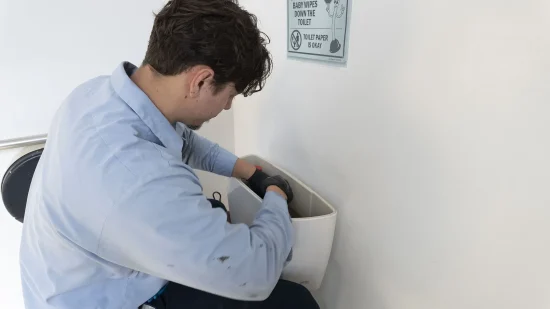
- Inspect restrooms building-wide. Check every toilet, urinal, and sink for running water, slow drains, or weak flushes, especially in high-traffic bathrooms near gyms and cafeterias.
- Test water fountains and bottle-filling stations. Confirm steady flow and check for discoloration, which can signal corroded pipes.
- Check for hidden leaks. Review recent water bills for unexplained spikes and look for water stains on ceilings, walls, and under sinks.
- Clear slow or clogged drains. Floor drains in locker rooms, kitchens, and mechanical rooms are common trouble spots after months of low use.
- Inspect cafeteria and kitchen plumbing. Grease traps, dishwashers, and commercial sinks need to be flowing freely before food service ramps back up.
- Test water heaters. Make sure hot water reaches locker rooms, kitchens, and labs, and check for sediment buildup that reduces efficiency.
- Check outdoor spigots and irrigation lines. Confirm no freeze damage or leaks occurred if the system wasn’t used over the summer.
- Review backflow prevention devices. Many states require annual testing for schools, so confirm compliance before the year begins.
- Walk science labs and art rooms. Eyewash stations and specialty sinks are easy to overlook, but are critical for safety compliance.
- Schedule a professional inspection. A licensed plumber can spot early warning signs a visual walkthrough misses, especially in older buildings.
Don’t Wait for an Emergency
A burst pipe or backed-up sewer line during the first week of school doesn’t just cost money to fix, it disrupts classes, raises safety concerns, and can force a partial building closure at the worst possible time. Scheduling an inspection now, while hallways are still quiet, gives your maintenance team time to make repairs on a normal timeline instead of an emergency one.
Roto-Rooter of California works with schools, colleges, and universities across the region to catch plumbing issues before students return. From drain cleaning to water heater checks and backflow prevention services, a pre-semester inspection is one of the simplest ways to start the year off without interruption.
Frequently Asked Questions
How far in advance should a school schedule a plumbing inspection?
Aim for two to four weeks before the semester starts. This leaves enough time to schedule repairs, order parts if needed, and retest fixtures before students arrive.
What are the most common plumbing issues found after summer break?
Slow or clogged drains, weak water pressure from mineral buildup, minor leaks that went unnoticed, and sediment in water heaters are the most frequent findings after weeks of low use.
Do colleges have different plumbing needs than K-12 schools?
Colleges often have more building types to check, including dorms, dining halls, labs, and athletic facilities, each with its own fixtures and usage patterns. The inspection scope is usually larger, but the goals are the same.
Is backflow testing required for schools?
Many state and local codes require annual backflow prevention testing for schools due to the risk of contaminating the public water supply. Requirements vary by location, so check with your local water authority.
What should be done if a leak or clog is found during the walkthrough?
Document the issue, shut off the water supply to that fixture if it’s actively leaking, and contact a licensed plumber promptly so repairs are finished before students and staff return.