If your home in the Coachella Valley was built more than a few decades ago, there’s a good chance it’s still relying on original galvanized steel plumbing and that pipe is quietly working against you. Of all the plumbing issues that show up across the valley, aging galvanized pipe is one of the most common, and one of the most likely to lead to a costly surprise if it’s ignored.
Why Galvanized Pipe Was Used in the First Place
Galvanized steel pipe, steel coated in a layer of zinc to resist rust, was the standard choice for residential plumbing for much of the 20th century, and it shows up throughout the Coachella Valley’s older housing stock. This is especially true in Palm Springs, where entire neighborhoods of midcentury homes were built with it, but it’s just as common in older sections of Desert Hot Springs, Coachella, and Twentynine Palms. At the time, it was a durable, affordable upgrade over the lead and iron piping that came before it.
Why It Fails Over Time
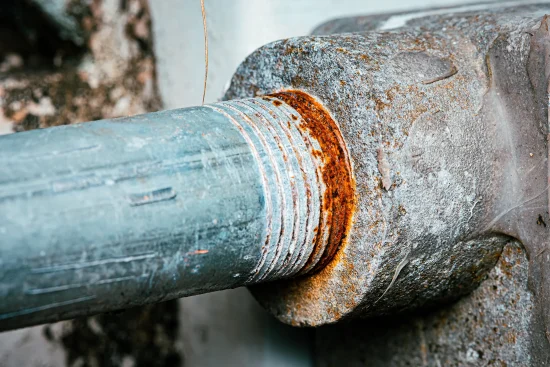
The zinc coating on galvanized pipe was never meant to last forever. Manufacturers generally expected 40 to 50 years of useful life, and a lot of valley homes are now well past that mark. As the zinc wears away, the exposed steel underneath begins to corrode from the inside out. Mineral-rich, hard groundwater, a defining feature of this region, accelerates that corrosion, building up rust and scale along the interior walls of the pipe.
The result is a pipe that narrows from the inside, restricting water flow, and eventually becomes brittle enough to develop pinhole leaks or fail outright. This process is invisible from outside the wall, which is exactly why it catches so many homeowners off guard.
Signs Your Home Might Have a Galvanized Pipe Problem
- Rusty, discolored, or metallic-tasting water, especially right after the tap has been off for a while
- Noticeably weak water pressure, particularly in older parts of the home
- Frequent, small leaks that seem to appear out of nowhere
- Visible rust, flaking, or corrosion on exposed pipes under sinks, in the garage, or in a crawl space
- A home built before the 1970s that hasn’t been re-piped
A Valley-Wide Issue
While Palm Springs gets most of the attention for its concentration of midcentury architecture, galvanized pipe is a valley-wide concern. Older homes in La Quinta, Rancho Mirage, and Indian Wells often carry the same original plumbing behind updated interiors. Coachella and Desert Hot Springs have their own stock of aging homes where galvanized pipe is still doing double duty decades past its intended lifespan, and pockets of older construction in and around Twentynine Palms face the same risk. Homeowners in any of these cities should treat pipe age as seriously as roof age or HVAC age when evaluating a property.
What to Do About It
The long-term fix for failing galvanized pipe is re-piping the home with copper or PEX, both of which resist corrosion far better and hold up well against the valley’s hard water. A licensed plumber can inspect exposed sections of pipe, check water pressure and discoloration patterns, and in some cases use a small camera to assess the interior condition of the lines before recommending full or partial replacement.
Re-piping is a significant project, but it’s almost always less disruptive and less expensive than dealing with a burst pipe inside a wall or under a slab. If you own an older home anywhere in the valley and aren’t sure what your plumbing is made of, that’s worth finding out before it becomes an emergency.
Other Plumbing Issues Worth Watching
Galvanized pipe isn’t the only desert-specific plumbing challenge in the Coachella Valley. Hard water accelerates sediment buildup in water heaters, shifting soil can contribute to slab leaks, and underground irrigation lines that are common on the larger properties found in Rancho Mirage and Indian Wells, can leak unnoticed for months. These issues are worth keeping an eye on, but for homeowners in older properties, aging galvanized pipe remains the one most likely to cause sudden, significant damage if left unaddressed.
FAQS
How do I know if my home has galvanized pipes?
The easiest way is to check exposed piping under sinks, in the garage, or in a crawl space, as galvanized pipe has a dull gray color and is magnetic, unlike copper or PEX. If your home was built before the 1970s and hasn’t been re-piped, there’s a good chance at least some of the original galvanized plumbing is still in place. A licensed plumber can confirm this quickly during an inspection.
How long do galvanized pipes actually last?
Most galvanized pipe is expected to last for 40 to 50 years, though hard water (common throughout the Coachella Valley) can shorten that lifespan by accelerating internal corrosion. Many valley homes are now past that window, which is why pipe age is worth checking even if there are no obvious symptoms yet.
Is discolored water from galvanized pipes dangerous?
Rusty or discolored water is usually a sign of internal corrosion rather than an immediate health hazard, but it shouldn’t be ignored. It typically means the pipe’s protective zinc coating has worn away and the steel underneath is degrading, which can eventually lead to leaks, reduced water quality, and pipe failure.
How much does re-piping a home cost?
Cost varies widely depending on the size of the home, the piping material used (copper vs. PEX), and how accessible the existing pipes are. Because pricing depends on so many home-specific factors, it’s best addressed with a direct estimate. A Roto-Rooter plumber can assess your specific plumbing layout and give you an accurate cost range.