There’s a scenario that nearly every property owner faces eventually: you empty a sink or step out of the shower, only to watch the water pool stubbornly at your feet or come back up. Your immediate instinct is to clear the blockage before it gets worse, but as you begin Googling solutions or browsing the plumbing aisle at a local hardware store, you’ll encounter a common point of confusion: the choice between a drain snake vs drain auger.
While homeowners and even some home improvement blogs frequently use these terms interchangeably, they are distinct tools engineered for entirely different plumbing challenges. Understanding the difference between a plumbing snake vs auger is important to make the right choice to protect your home’s infrastructure. Deploying the wrong tool can lead to unnecessary frustration, wasted time, and an increased risk of structural pipe damage, which is a way bigger problem than a drain clog.
A standard drain snake is a relatively slender, lightweight, manual tool. It features a thin, flexible cable, typically from 15 to 25 feet in length that terminates in a simple coiled or corkscrew tip, and can have “teeth” along the side to catch hair on the way up. This design makes it highly effective for targeting minor, shallow blockages located close to the drain opening, such as hair and soap scum accumulations in bathroom sinks, tubs, and showers, but it’s effectively useless if the problem is bigger or farther down the pipe.
Conversely, a true drain auger represents the heavy-duty side of drain clearance. Whether designed as a heavy-duty drum auger for standard lines or a specialized closet auger for toilets, these tools utilize much thicker, more rigid cables that can extend anywhere from 25 to over 100 feet. They are frequently powered by integrated hand cranks or high-torque electric motors, allowing them to reach deep into main sewer lines to break up dense, unyielding obstructions, but they can cause damage if you just need to clear a shallow, simple clog.
| Tool Type | Primary Applications | Power Source | Ideal Target Material |
| Drain Snake | Sinks, showers, and bathtubs | Manual hand power | Hair clumps, soap film, soft organic gunk |
| Drain Auger | Toilets, main lines, and floor drains | Manual or motorized | Tree roots, thick grease, solid foreign objects |
By recognizing these physical and structural differences, you can better diagnose your own plumbing issues and determine when a minor clog is safe to handle yourself. More importantly, this knowledge helps you recognize the exact moment it is best to step back and search for professional plumbers near you to ensure your drains and pipes are cleared safely and effectively.
When is a Drain Snake the Right Tool?
When you are dealing with a slow-draining bathroom sink or a shower that leaves you standing in a shallow pool of soapy water, a standard plumbing snake is typically your best first line of defense. These tools are accessible and straightforward to operate because you literally just stick them down the drain, making them an excellent choice for routine DIY household maintenance.
The manual drain snake excels at clearing blockages from bathroom fixtures because of how daily hygiene routines impact residential plumbing. Over time, shed hair naturally binds with sticky soap scum, body oils, and grooming products to create a dense, localized obstruction. Because these materials almost always accumulate right beneath the drain stopper or within the immediate U-shaped trap beneath the fixture, you don’t need industrial-grade machinery to clear them out.
Learning how to use a drain snake effectively relies primarily on patience and tactile feedback. To begin, you gently feed the flexible cable directly into the drain opening by hand rather than forcing it down all at once. As you push the cable forward, you will encounter a natural point of resistance where the pipe bends away from the fixture. This is the P-trap, and navigating this P-trap obstruction requires you to slowly rotate the handle of the snake while applying gentle forward pressure, allowing the flexible metal to follow the contours of the pipe without scraping the interior walls too aggressively, as you don’t want to cause more damage while you’re fixing a small problem.
Once the cable moves past the trap and makes contact with the actual clog, you will feel a distinct transition from a hard pipe turn to a soft, spongy barrier. At this point, you rotate the snake’s handle clockwise to drive the corkscrew tip directly into the center of the debris. Instead of trying to push the blockage further down into the plumbing system, your goal is to hook and tangle the hair and soap scum within the coils. You then slowly and steadily withdraw the cable back up through the drain, pulling the accumulated debris out entirely so it can be safely discarded. While this process is incredibly effective at clearing minor clogs, a manual snake lacks the structural strength to punch through solid objects or reach deep systemic blockages that are located behind your walls.
When Do You Need a Drain Auger?
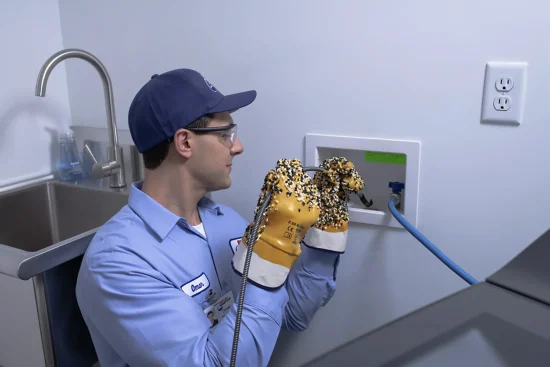
When a standard plumbing snake proves to be too short or too flexible to make a dent in a clog, your plumbing situation may require the advanced capabilities of a drain auger. These tools are specifically engineered for deep-seated blockages, mainline sewer backups, and heavy-duty obstructions that occur far beyond the reach of a standard sink drain.
The most common consumer version of this tool is the heavy-duty drum auger, which stores a long, robust cable inside a rotating canister. Another highly specialized variant is the toilet auger, also known as a closet auger. It is crucial to note that you should never use a standard kitchen or bathroom drain snake inside a toilet bowl. The exposed, raw metal of a standard snake will permanently scratch, gouge, and stain the delicate porcelain finish. A proper toilet auger features a rigid steel rod handle wrapped in a protective vinyl or rubber sleeve, allowing a heavy cable to pass smoothly through the toilet’s internal trap without ever contacting the visible porcelain surface.
The sheer power of a motorized or commercial-grade auger is necessary when dealing with tough structural blockages, like thick layers of hardened kitchen grease, packed masses of flushable wipes, or tree roots that have snaked their way into underground pipe joints. However, this mechanical advantage comes with a serious caveat. Motorized augers generate intense levels of rotational force, meaning that with great power comes the risk of pipe damage. If a heavy-duty cable binds against a solid obstruction like a pipe joint or a structural collapse, the trapped cable can instantly twist, kink, or whip violently. This sudden recoil can shatter older plastic PVC lines, crack fragile cast-iron pipes, or cause hand and wrist injuries to an inexperienced operator.
The Risks of DIY Drain Cleaning: When “Fixing It” Makes It Worse
It is easy to walk into a local hardware store and feel a wave of DIY confidence when you see rows of commercial-grade motorized augers available for rent. While the temptation to handle a major main line backup yourself to save on immediate costs is understandable, it often overlooks an important detail: even though anyone can rent high-powered plumbing equipment, you can’t actually rent the years of diagnostic field experience required to operate those machines safely.
Professional drain technicians spend thousands of hours learning how to read the subtle vibrations traveling back through a spinning steel cable. They can instantly distinguish the tactile feedback of a soft grease buildup from a hard clay pipe transition, a shifting structural joint, or an invasive tree root system. Without that specialized sense of touch, an ambitious DIY drain cleaning attempt can easily turn a straightforward clog into a catastrophic home emergency.
There are several common disasters associated with amateur drain cleaning that professional plumbers see on a regular basis. For example, forcing an improper tool down a line can lead to shattered underground pipes, or a cable can become so deeply entangled in a broken pipe joint that it becomes permanently stuck, meaning you’ll have to excavate the floor just to retrieve the trapped tool. Additionally, many homeowners who get frustrated with a mechanical tool will eventually pour aggressive chemical drain cleaners down the pipe out of desperation. This creates a highly toxic, corrosive pool of standing acid inside your plumbing system. When the chemicals inevitably fail to dissolve a heavy mechanical blockage, you are left with a dangerous hazard that can degrade your pipes and cause severe chemical burns to anyone who attempts to service the line afterward. Ultimately, paying for professional assistance from the start is consistently more affordable than paying to replace a ruptured main sewer line beneath your home’s foundation.
When to Put Down the Tools and Call a Plumber
Knowing exactly when to put your tools away and step back from a clogged fixture is actually the smart, responsible choice, even if saving money feels like the right call. You don’t ever want to push a bad plumbing situation past the point of no return. Establishing a clear threshold for when to stop trying to fix the issue yourself will protect your property, your budget, and your peace of mind.
There are several clear, unmistakable warning signs that indicate it is time to halt all DIY efforts and search for a qualified professional specializing in clogged drain repair. The most definitive signal is a multi-fixture backup occurring simultaneously across your home. If flushing your upstairs toilet causes raw sewage to bubble up into your ground-floor bathtub, or if running your washing machine forces dirty water into your kitchen sink, you are dealing with a deep main line blockage rather than an isolated fixture issue. A basic manual snake can’t even reach, let alone resolve, a main sewer line emergency.
Another telltale symptom that requires professional intervention is a constant, rhythmic gurgling sound echoing from your drains even when no water is actively running. This indicates that sewer gases and air are trapped behind a blockage, signaling an advanced issue within your main stack or vent lines. Furthermore, if you are operating a manual snake and the cable hits an absolute, unyielding physical barrier that stops all forward progress, you must stop pushing immediately. Forcing the cable forward against a hard obstruction can puncture an aging pipe or bend your tool out of shape. Recognizing these limitations and contacting local drain experts ensures that your home’s plumbing infrastructure is treated with the proper diagnostic care, keeping your system safe and functioning properly.
Roto-Rooter’s Professional Drain Cleaning Advantage
When household tools fail to clear a stubborn backup, Roto-Rooter is ready to provide commercial-grade solutions directly to your home. We don’t rely on guesswork or blind drilling to resolve your plumbing issues. Our approach is designed to accurately diagnose and permanently resolve the root cause of your drainage problems while keeping your pipes completely safe.
Our service begins with advanced diagnostic technology, utilizing high-definition, waterproof sewer micro-cameras that travel directly into your plumbing system. This allows our technicians to view the interior of your pipes in real time, pinpointing the exact location and material makeup of the blockage. Whether your pipes are restricted by a mass of invasive tree roots, accumulated kitchen grease, or a foreign object, we see the problem clearly so we can select the best method to clear things up.
Instead of simply poking a temporary hole through a clog with a basic consumer tool, our teams specialize in advanced professional drain cleaning techniques like Hydro-Jetting. This process uses precisely calibrated, high-pressure water streams to scour the interior walls of your plumbing lines. Hydro-jetting strips away decades of accumulated grease, mineral scale, and organic sludge, restoring the full diameter of your pipes to a like-new condition.
Whenever you find yourself dealing with a stubborn backup and looking for the best plumber near me, remember that Roto-Rooter’s local dispatchers are always nearby and available for emergencies. Equipped with commercial-grade technology and extensive regional field experience, we are ready to take the stress out of any plumbing emergency.
Frequently Asked Questions
Should I use a drain snake or a drain auger for a clogged toilet?
You should exclusively use a specialized toilet auger, also known as a closet auger, to clear a toilet blockage. You should never attempt to use a standard kitchen or bathroom drain snake in a toilet bowl because its exposed, raw metal coils will permanently scratch and mark the delicate porcelain, which requires a delicate hand. A proper toilet auger features a specialized protective sleeve that guides the heavy internal cable safely through the porcelain trap without causing any cosmetic damage.
Can a drain snake damage my pipes?
Yes, a drain snake can cause damage if it is used improperly or forced too aggressively down a line. While lightweight or plastic manual snakes are generally safe for modern plumbing fixtures, forcing them through tight bends can scrape and weaken older pipes. Heavy-duty motorized augers present an even higher risk, as their intense rotational force can easily fracture brittle, aging cast-iron lines or shatter thin PVC pipes if the cable binds up inside the wall.
How much does it cost to hire a plumber near me to unclog a drain?
The total cost of professional drain clearing depends heavily on the location and complexity of the blockage. A localized clog located immediately beneath a single bathroom sink is typically much faster and less expensive to clear than a deep main line obstruction that requires specialized video camera diagnostics or high-pressure hydro-jetting. Contacting local plumbing experts for an accurate, on-site assessment is the best way to receive a transparent quote tailored to your specific system.
Why did my drain auger get stuck in the pipe?
A drain auger usually becomes stuck when its cable is forced too aggressively around a sharp elbow joint or when the cutting head wraps itself tightly around an unyielding object, such as a thick tree root or a collapsed section of a broken pipe. If your auger becomes stuck, you should never try to yank it out violently, as this can snap the steel cable or pull your pipes apart. It is best to call a professional plumber to extract the tool safely so you can avoid making the situation worse.
When should I stop trying to unclog a drain myself and call a local plumber?
You should stop all DIY attempts immediately if you notice water backing up into multiple fixtures simultaneously, if your drains are making constant gurgling noises, or if your manual snake hits a completely immovable object. These symptoms point to a serious main line issue or structural pipe failure that requires the specialized diagnostic tools and experience of a licensed professional technician to resolve safely.