A burst pipe, overflowing toilet or leaking appliance can leave you facing a wet floor and a long list of questions. Where is the water coming from? How far has it spread? Do you need a plumber, a water damage restoration team or both?
Water damage restoration involves more than removing visible water. Moisture can travel beneath flooring, soak into drywall and collect in places you cannot easily see. Addressing the source and drying affected materials helps limit further damage.
At Roto-Rooter, we help homeowners handle plumbing problems and the water damage they leave behind. Here is what you should know when water enters your home.
Common Causes of Water Damage
Water damage can happen suddenly or develop slowly behind a wall or beneath a sink. Common sources include:
- Burst or leaking water supply pipes
- Overflowing toilets and backed up drains
- Washing machine and dishwasher leaks
- Water heater leaks
- Sump pump failures
- Heavy rain and water intrusion
The source matters because it affects how the area should be cleaned. Water from a broken supply pipe requires a different approach than sewage or outdoor floodwater, which may contain harmful contaminants.
A plumber can investigate a plumbing related leak or backup and recommend repairs. Water damage restoration professionals can then assess the affected area and determine what needs cleaning, drying or removal.
What to Do When You Discover Water Damage
Stop the Water if You Can Do So Safely
If a plumbing fixture or appliance is leaking, turn off its water supply valve if it is safely accessible. For a larger plumbing leak, you may need to shut off your home’s main water supply.
Do not enter standing water to reach a valve if electrical equipment, outlets or wiring may be involved. Keep people and pets away from the affected area until it can be assessed safely.
Protect Yourself Before Protecting Your Belongings
Avoid contact with sewage and water from an unknown source. Do not use a household vacuum to remove standing water or operate electrical appliances in a wet area.
If the area is safe to enter, move dry valuables and portable belongings away from the water. Leave heavy, waterlogged furniture and damaged building materials for professionals to evaluate.
Document the Damage
Take photographs or videos from a safe location. Capture the apparent source, affected rooms and damaged belongings. If you plan to file an insurance claim, contact your insurer for instructions about documentation and damaged items.
Coverage depends on your policy and the cause of the damage. Do not assume every type of water loss is covered.
Call for Professional Help
Contact a plumber when a leaking pipe, overflowing fixture or drain backup is causing the problem. If water has spread into floors, walls or multiple rooms, professional water damage restoration may also be needed.
Stopping the leak and drying the property are separate parts of the recovery process. Both deserve attention.
What Happens During Water Damage Restoration?
Inspection and Moisture Assessment
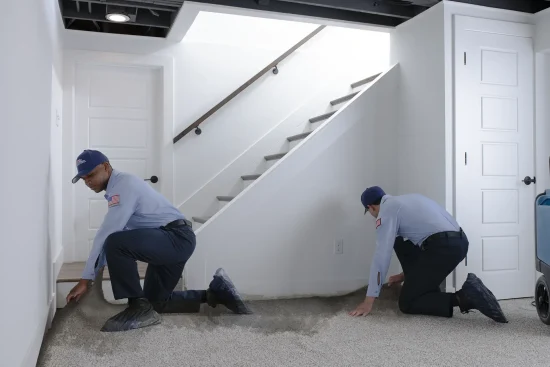
The restoration team examines the affected area, identifies the water source and checks how far moisture has traveled. Moisture detection tools help locate damp materials beyond the visible puddle.
This assessment guides the work and helps identify materials that may need removal.
Water Extraction
Professional extraction equipment removes standing water from accessible areas. Removing excess water prepares the space for drying, but extraction alone does not mean the building materials are dry.
Cleaning and Material Removal
The cleanup approach depends on the water source, affected materials and extent of damage. Some belongings and surfaces may be cleaned. Certain porous materials may require removal, particularly when they are contaminated or cannot be dried effectively.
Drying and Dehumidification
Air movers and dehumidifiers help remove remaining moisture from affected materials and indoor air. The team monitors moisture levels to evaluate drying progress.
A surface that feels dry may still hold moisture underneath. Drying decisions should be based on measurements as well as visible conditions.
Repairs After Drying
Once the affected area is appropriately cleaned and dried, repairs may include replacing drywall, flooring, trim or other damaged materials. Confirm what restoration and reconstruction work is included in your service plan.
Signs You May Have Hidden Water Damage
Not every leak creates an obvious puddle. Contact a plumber if you notice unexplained signs such as:
- Recurring water stains on walls or ceilings
- Peeling paint or bubbling finishes
- Warped flooring or swollen baseboards
- Persistent musty odors
- Damp cabinets beneath plumbing fixtures
- An unexplained increase in water use
These signs can have several causes. Professional inspection helps determine whether an active plumbing leak or another moisture problem needs attention.
Get Help With Water Damage Restoration
Water damage can feel overwhelming, but the next steps are straightforward: stay safe, stop the source when possible and arrange professional assessment.
Roto-Rooter plumbers can help identify and repair plumbing problems, while our water damage restoration professionals address the resulting cleanup and drying needs. Contact Roto-Rooter to discuss the damage and arrange service in your area.